
Mileage log · Construction and trades
Mileage tracker for HVAC technicians
Furnace tune-ups in the fall, no-heat calls in January, air conditioning installs in June. An HVAC tech can run eight stops a day in peak season, and the log has to hold every one. Odie records them from your service van.

No account. Free for 40 automatic trips a month, no card.
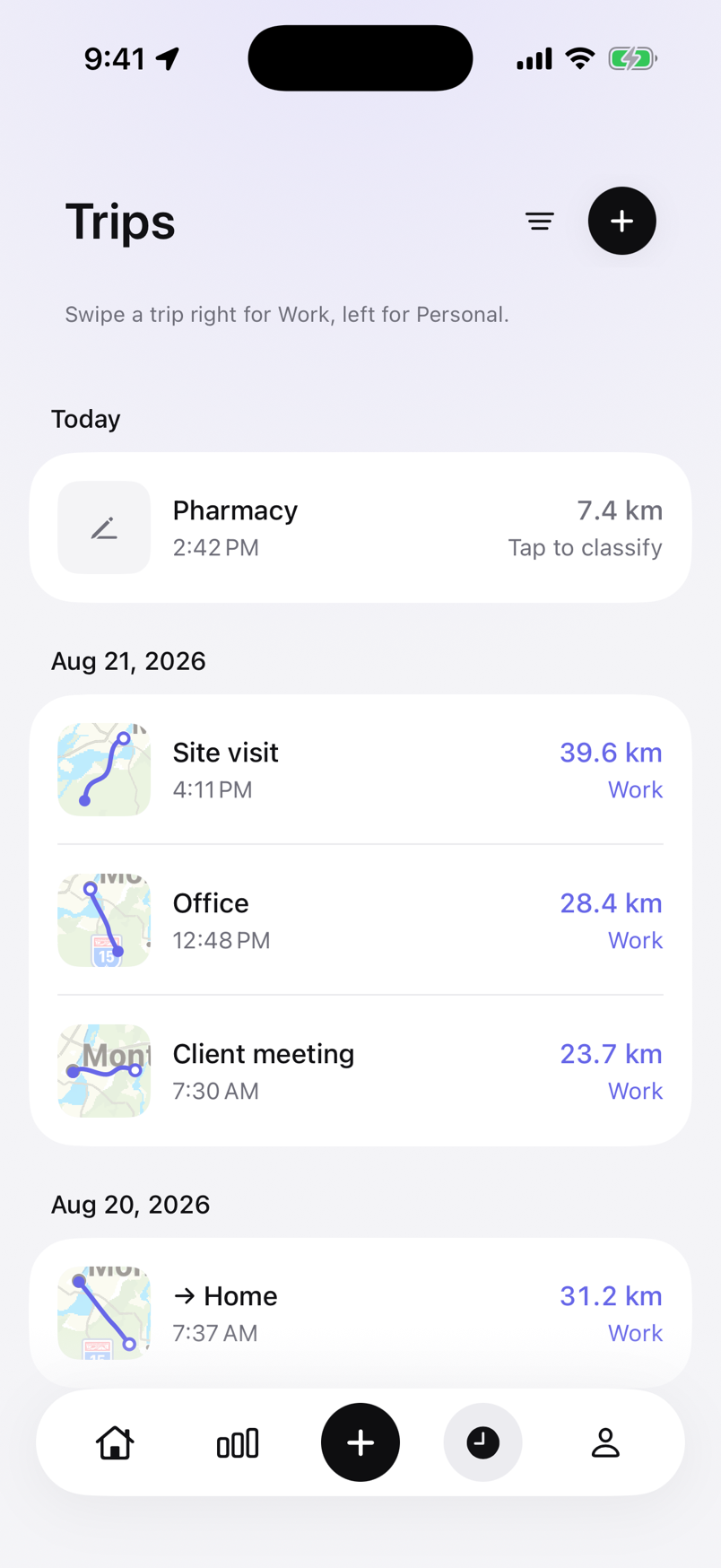
A day on the road
A cold Monday in January:
- WorkHome to a no-heat call
- WorkNo-heat call to the parts distributor for an igniter
- WorkDistributor back to finish the repair
- WorkRepair to a furnace maintenance visit
- WorkMaintenance visit to a quote for a heat pump
Peak-season weeks can hold more business driving than the rest of the quarter. A log kept by hand tends to thin out exactly then.
What counts as business driving
In the log as Work
- Maintenance visits on a seasonal route
- Repair and no-heat or no-cooling calls
- Install days and the trips to fetch equipment
- Parts runs to the distributor
- Quotes and load calculations at client homes
Not business
- Home to a shop you report to every day
- Personal stops between calls
- Personal use of the van
What the log is worth
A worked example for a self-employed driver in each country. Your numbers will differ; the method is the same.
Canada · self-employed
24,000 business km out of 32,000 km in total is 75.0% business use. Applied to $13,500 of car costs for the year, that is
$10,125
Deducted on the T2125. There is no per-kilometre deduction for the self-employed: it is a share of real costs, and the log proves the share.
The CRA on motor vehicle expensesUnited States · self-employed
15,000 business miles at the IRS standard rate of 76¢ (Jul 1 to Dec 31, 2026) is
$11,400
Deducted on Schedule C if you use the standard mileage rate. Business parking and tolls go on top.
Schedule C instructionsYour vehicle
Service vans carry equipment, refrigerant and tools, and some techs also drive a personal car on the side. Each vehicle needs its own log and odometer readings. Running costs are deducted as the business share of each.
Expenses to keep with the log
- Fuel
- Parking and tolls
- Insurance, licence and registration, as the business share
- Repairs and maintenance
- Loan interest or lease
What Odie does
- Starts a trip when your vehicle’s Bluetooth connects and you are moving, and ends it when you park.
- Asks Work or Personal from the lock screen, and suggests the answer after the same route twice.
- Keeps fuel, charging, parking and toll receipts next to the trips.
- Builds the year report: summary, monthly and per-client totals, expenses, the trip log and the odometer readings.
Odie recognises each vehicle by its Bluetooth name, so trips in the van and trips in the car land in the right log without you choosing. See a sample year report (PDF)
Questions
I drive the van for work and my car for everything else. Do I need a log for both?
For the CRA, records are kept per vehicle, with odometer readings for each. If the car never carries a business trip, it has no business share to deduct. See two cars, one business.
Is the first call of the day business?
If home is your place of business, the drive out to the first client is business. If you report to a shop as an employee, that drive is the commute.
How much does a day of eight stops take to log?
Odie starts and ends each trip by itself. You tap Work or Personal on the lock screen when you park, and after the same route twice it suggests the answer.
Informational, not tax advice. Your accountant knows your situation.
Guides
-
Is driving to work deductible in Canada? The CRA rule
Home to your regular workplace is personal. What the CRA counts as business driving instead, a worked example, and how to log trips so the split holds up.
-
Capital cost allowance for a vehicle in Canada
How a vehicle's purchase price turns into a yearly deduction on Form T2125, the $39,000 line that sets the class, and what changes for an electric one.
-
Mileage log with two cars for one business
A cargo van at 86% business use and a sedan at 20% cannot share one logbook. Why the CRA wants each vehicle's kilometres and costs kept apart.
Your next work trip can log itself.
Odie is on the App Store, free to start.